Concept redesign · not the live site · Aug 2026

One culm, split six ways, glued back together.

In their own words: cane chosen for maximum power fibre density, hand split, milled and hand planed to exacting tolerances. Then flamed to a rich brown, glued with waterproof glue and heat cured, and finished under multiple coats of marine spar varnish.
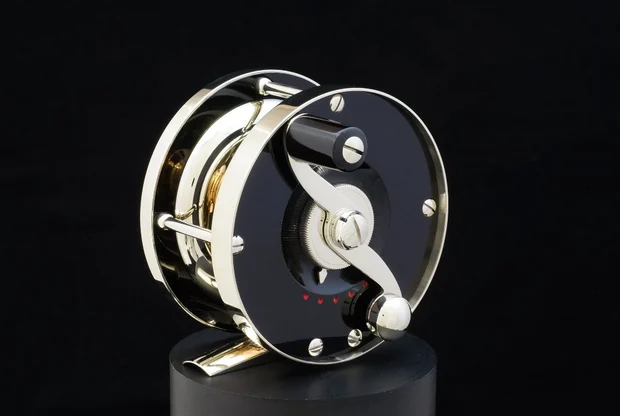
Jeffrey D. WagnerParma Heights, Ohio Over thirty yearsOne culm
A Wagner small-batch fly reel: nickel silver frame with a black anodised side plate, knurled drag knob and a curved counterbalanced handle, photographed against black.
A reel from the small batch. Models 1, 2 and 3.1000 × 671
01The sectionScroll to follow the strip

Six strips, each planed to sixty degrees.

The cross-section in the left margin is doing what the maker does. It begins as one culm of cane. It splits six ways. Each strip is planed until its inner faces meet at sixty degrees and its outer face is the skin of the plant, where the power fibres run densest. Then the six go back together as a hexagon, and that hexagon is the rod.

Nodes — the joints in the cane, and the weakest places in it — are staggered three by three, and mirror matched on the tips so that the two halves of a tip section behave the same way.
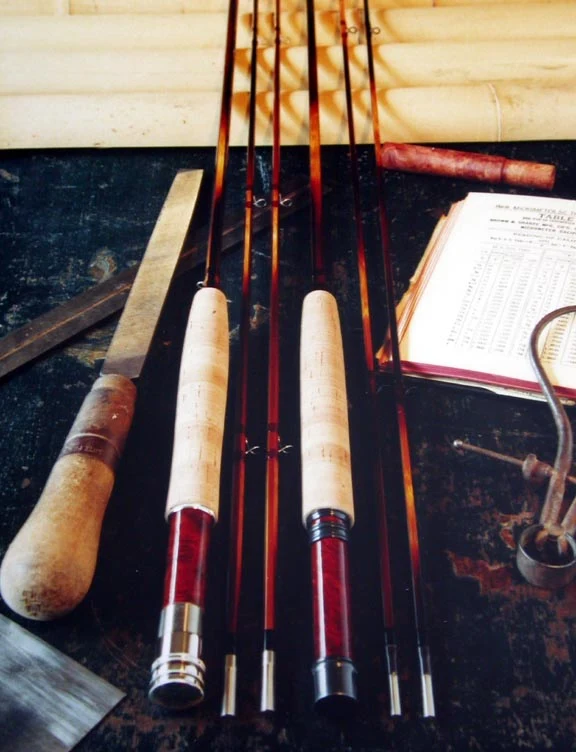
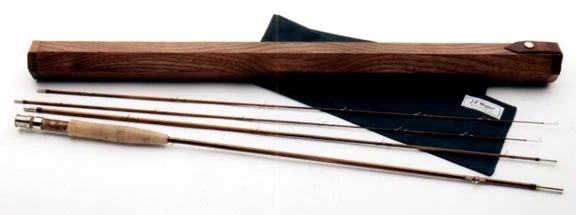
Finished Wagner rod sections laid side by side, showing wraps, ferrules and the flamed cane.
Finished sections.576 × 752
02The rack18 models, drawn to scale against each other

Six foot three to eight foot six. Nothing longer.

Every length and line weight below is taken from the list the shop publishes. The bar beside each is that rod, drawn at its true length relative to the others — the shortest is six foot three, the longest eight foot six.

6′ 3″3 wt. and 4 wt.
6′ 3″3–4 wt., two piece only
6′ 5″3–4 wt.
6′ 6″2 wt.
6′ 8″3 wt.
7′1–2 wt.
7′3 wt.
7′4 wt.
7′ 3″4–5 wt.
7′ 6″3 wt.
7′ 6″4 wt.
7′ 6″5 wt.
8′3 wt.
8′4 wt.
8′4–5 wt.
8′5 wt.
8′5–6 wt.
8′ 6″5 wt., three piece only
03What goes into oneIn the maker’s own description

Ten things, and the name of the person who made each.
01CaneChosen for maximum power fibre density, hand split, milled and hand planed to exacting tolerances.
02FlamingThe cane is flamed to a rich brown colour.
03NodesStrips split and straightened by hand; node spacing 3×3, mirror matched on the tips.
04GlueBlanks glued with waterproof glue and heat cured.
05FerrulesSuper-Z style by Classic Sporting Enterprises, lapped to give a satisfying pop when the sections come apart.
06Stripping guidesAgate rings in nickel silver frames, made one at a time by Darryl Whitehead.
07Reel seatScrewlock, made by Bob Venneri of New York. Stabilised maple burl filler, nickel silver metal, domed end cap, finely knurled slide band, retaining ring and cap.
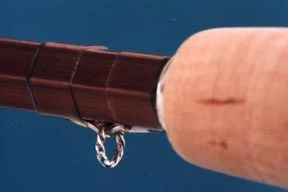
08GripExtra select cork rings. Finely knurled nickel silver winding check. Handmade sterling silver ropebraid hookkeeper.
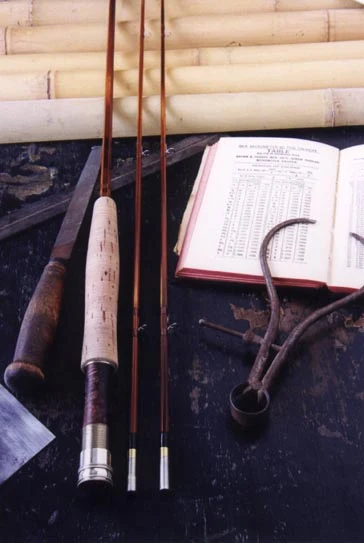
09WrapsVery fine silk with delicate black tipping; ferrule wraps in black silk.
10VarnishMultiple coats of high gloss marine spar varnish.
The nickel silver end cap and knurled retaining ring of a Wagner reel seat.
Domed end cap, knurled ring.576 × 235
The signature wrap and inked lettering on the butt section of a Wagner rod.
The butt, signed.576 × 215
A handmade sterling silver ropebraid hookkeeper on a cane rod.
Ropebraid hookkeeper.288 × 192
Fine silk wraps with black tipping on a flamed cane rod section.
Silk, tipped in black.364 × 543
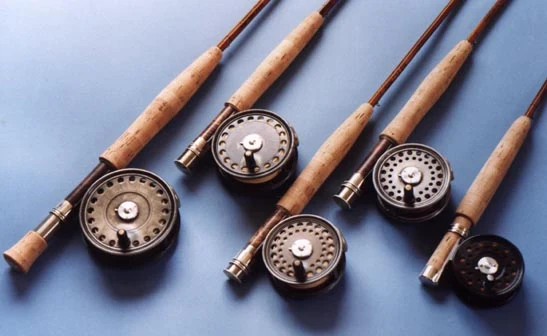
Three Wagner reels of different sizes side by side.
Models 1, 2 and 3.547 × 336
04The shopCuyahoga County, Ohio

6549 Kingsdale Boulevard.

WhereJeffrey D. Wagner, Inc.
6549 Kingsdale Blvd. · Parma Heights, Ohio 44130
AlsoRodbuilding classes and tools · vintage cane bought and taken on consignment